

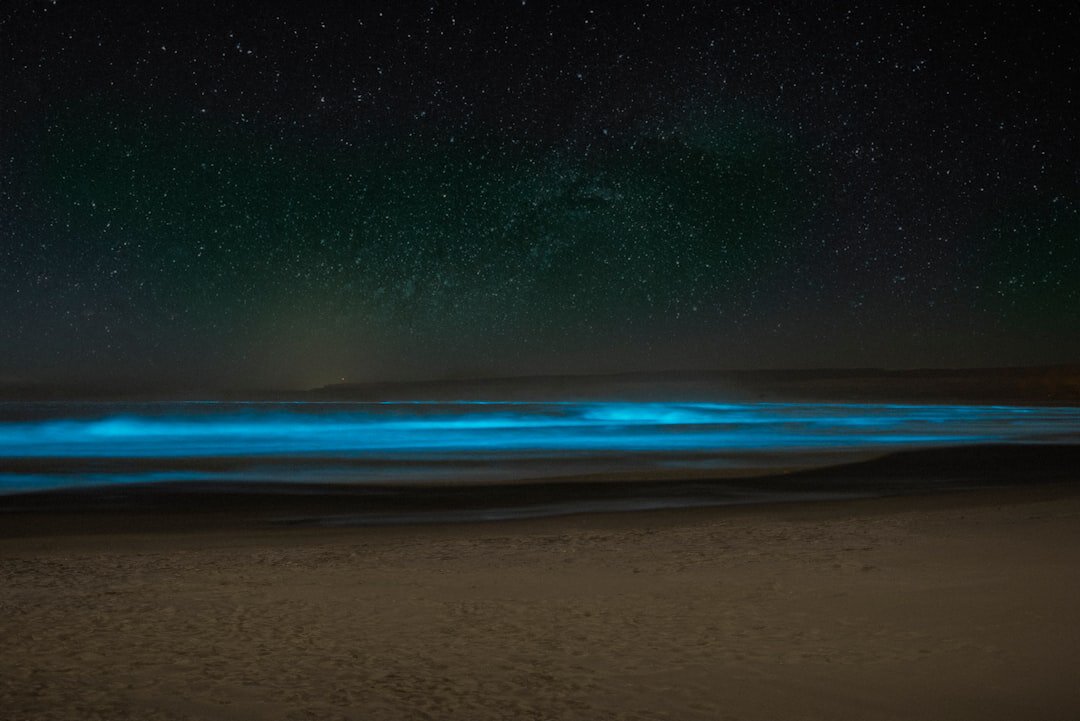
Can you imagine looking at stars but not in the sky but in the ocean? No, we are not talking about starfish. We are talking about real stars in the sea.
Well, neither we talk about the reflection of stars from above. Instead, we are talking about those that glow at night in the ocean.
Actually, there are several places you can visit to witness it. So, want to visit some of them?
Mystery in the Ocean
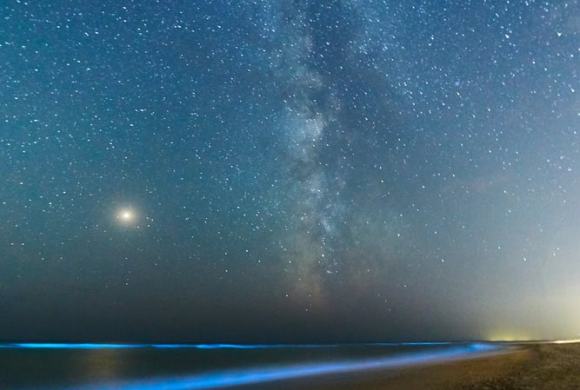
The ocean already holds a sense of mystery during the daytime, but at night some coastlines become even more extraordinary.
In certain parts of the world, waves suddenly glow electric blue, shorelines sparkle like scattered stars, and boats leave bright trails of light behind them as they move through the water.
This phenomenon, known as bioluminescence, is created by living organisms that produce light through chemical reactions inside their bodies. Although the glow can appear magical, it is actually part of a natural survival system used by microscopic plankton, squid, and other marine creatures.
In dark coastal waters, even a small movement from a wave, swimming fish, or human hand can trigger flashes of glowing light. These rare displays attract scientists, photographers, and travelers from around the world because they reveal one of nature’s most beautiful nighttime spectacles.
How Bioluminescent Glow

Bioluminescence occurs when living organisms generate light through chemical reactions. In the ocean, this glow is most commonly produced by microscopic plankton called dinoflagellates. These tiny organisms float near the water’s surface and emit flashes of blue or green light whenever the water around them is disturbed.
Scientists believe this glowing effect acts as a defense mechanism. When predators move through the water, the sudden flashes may startle them or attract larger predators that threaten the attacker. Whatever the exact purpose, the result creates breathtaking displays visible along beaches and coastlines at night.
Different organisms can produce bioluminescence in different ways. Some glowing coastlines are caused by algae blooms, while others involve marine animals such as jellyfish, crustaceans, or squid.
Water temperature, ocean currents, pollution levels, and seasonal weather patterns all influence when bioluminescence becomes visible.
In many places, the glow only appears during certain months of the year. Rainfall can also affect the brightness because nutrients washed into the ocean help microscopic organisms grow rapidly. Calm weather and dark skies usually provide the best viewing conditions, since artificial light can make the glow harder to see.
Although bioluminescence exists in oceans worldwide, only a few places consistently produce bright and reliable displays. These locations have become famous for their glowing waters and unique nighttime scenery.
Famous Beaches and Bays
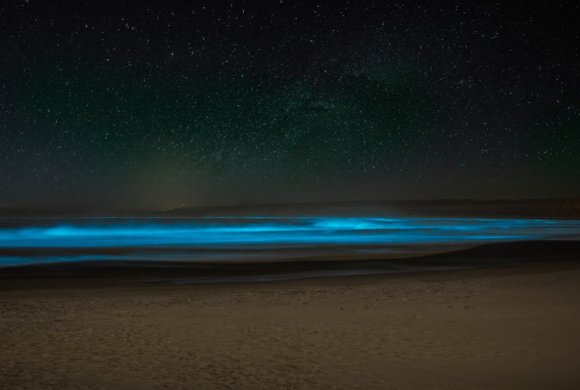
Some of the world’s best-known glowing coastlines are found in tropical bays and sheltered lagoons where bioluminescent organisms can gather in large numbers. One of the most famous examples is Mosquito Bay in Puerto Rico.
The bay became internationally recognized because of its intense blue glow, which is considered among the brightest on Earth. Tiny dinoflagellates called Pyrodinium bahamense are responsible for the illumination. At night, every movement in the water creates glowing trails that surround swimmers and boats.
Another remarkable destination is Jamaica’s Luminous Lagoon. Located where freshwater and saltwater meet, the lagoon supports huge populations of glowing plankton.
Mangrove forests surrounding the lagoon provide nutrients that help these microorganisms thrive. Visitors often swim directly in the glowing water, creating bright outlines around their bodies with every movement.
In the Maldives, glowing beaches appear during certain seasons when bioluminescent organisms wash ashore in large numbers. The waves create sparkling blue patterns along the sand that resemble stars scattered across the coastline.
Because the Maldives already attracts tourists for its tropical scenery, the glowing beaches have become one of the islands’ most photographed natural events.
Australia’s Jervis Bay also experiences impressive bioluminescent events. Following rainfall, large concentrations of Noctiluca scintillans can cause the bay to glow brightly at night. The effect is especially visible when waves break against the shore or when fish swim beneath the surface.
These famous locations demonstrate how environmental conditions can combine to create glowing oceans that appear almost unreal to visitors seeing them for the first time.
Unique Forms of Ocean Glow
Not all glowing waters are produced by the same organisms. In some places, entirely different marine species create the light displays. Toyama Bay in Japan offers one of the most unusual examples because its glow comes from firefly squid rather than plankton.
Every year between March and June, millions of firefly squid rise from deep ocean waters to breed near the shoreline. These small squid contain special light-producing organs that emit bright blue flashes.
As huge numbers gather near the coast, the bay appears illuminated with moving lights beneath the surface. Fishermen and tourists often gather to witness the event because it only occurs during a limited season.
Taiwan’s Matsu Islands are another famous bioluminescent location. The islands experience glowing blue waves known locally as “blue tears.” Like many glowing coastlines, these displays are caused by dinoflagellates. During peak conditions, the glowing water spreads across beaches and rocky coastlines, creating an almost dreamlike scene after sunset.
Malta’s Blue Grotto provides a slightly different experience. Instead of open beaches glowing at night, the sea caves along Malta’s southern coast reflect glowing blue light beneath the cliffs. Waves moving through the caves intensify the glowing effect, making the water appear bright and luminous.
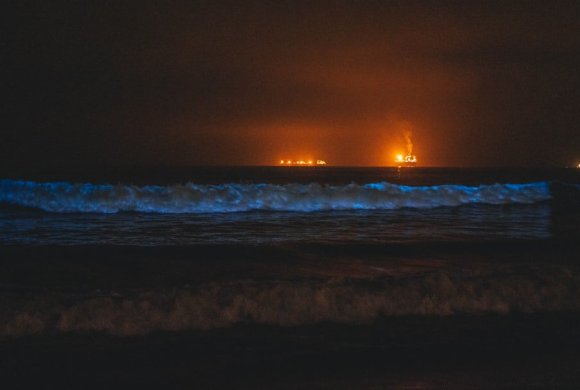
San Diego, California, occasionally experiences dramatic red tides caused by algae blooms. During the daytime, the ocean may appear reddish-brown, but at night the same organisms create glowing blue waves along the shoreline. These events are unpredictable, which makes them especially exciting when they occur.
Each location shows that bioluminescence can appear in many forms depending on the species involved and the surrounding marine environment.
More Than Beauty
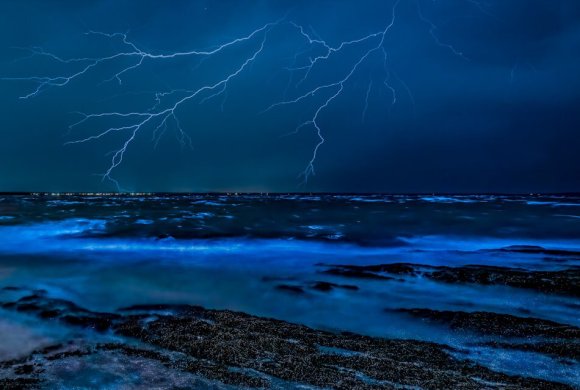
Bioluminescent oceans are more than beautiful tourist attractions. They also provide scientists with valuable information about marine ecosystems and environmental conditions. Changes in ocean temperature, pollution, and nutrient levels can all influence bioluminescent organisms, making these glowing events important indicators of ocean health.
Researchers continue studying dinoflagellates and other glowing species to understand how climate change may affect their populations. Warmer ocean temperatures in some regions may increase algae blooms, while pollution and habitat destruction may threaten marine ecosystems that support bioluminescence.
At the same time, glowing beaches highlight the importance of protecting dark natural environments. Artificial lighting from cities and coastal development can reduce visibility and disturb marine life. In heavily populated areas, many people may never experience truly dark coastlines where bioluminescence can be fully appreciated.
Tourism also creates challenges for fragile coastal ecosystems. Large crowds, boat traffic, and pollution may damage the habitats that support glowing organisms. Some locations now regulate nighttime tours to reduce environmental pressure while still allowing visitors to enjoy the phenomenon responsibly.
Despite these concerns, bioluminescent oceans continue to inspire fascination around the world. They remind people that nature still contains extraordinary sights hidden beyond everyday experience. Beneath dark skies and along quiet coastlines, the glowing ocean reveals a side of the natural world that feels almost impossible until it is seen firsthand.
Sources:
Leave a Reply