

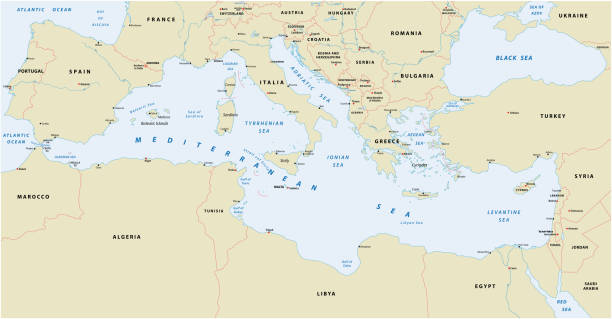
Is the sea still supposed to feel refreshing in the middle of summer? You might step into the Mediterranean expecting a cool escape from the heat, only to find water that feels surprisingly warm.
That may sound like good news for swimmers, but unusually warm seas can be bad news for the environment. In 2026, the Mediterranean and other European seas reached record temperatures, and scientists say human-caused climate change played a major role.
This isn’t simply about having a hotter summer. The ocean is changing too, and those changes can affect marine life, fishing, tourism, and even extreme rainfall on land.
Mediterranean Extreme Temperatures

The Mediterranean usually reaches its warmest temperatures in August or September. In 2026, however, the sea reached record heat much earlier.
The average Mediterranean temperature in July was around 27°C, the highest July temperature ever recorded. In early August, a buoy near Mallorca recorded 33°C.
That is seriously warm for seawater.
Scientists from World Weather Attribution, or WWA, wanted to find out how unusual this heat really was and how much of it could be connected to climate change. They compared today’s climate with a hypothetical world without human-caused global warming.
They used information from satellites, ships, buoys, and other ocean measurements. They also compared the observations with climate models to see whether the models could reproduce what was happening.
The results were striking.
According to the WWA analysis, human-caused climate change added about 2°C of warming to the Mediterranean and around 1.4°C to the seas around Western Europe.
In the western Mediterranean, the highest 14-day average temperature reached about 27.9°C in 2026. Around the Iberian Peninsula and Bay of Biscay, it reached about 21.4°C.
But the most surprising part isn’t the temperature itself. It’s how often we can expect such extreme heat.
Without human-caused warming, an event as extreme as the 2026 Mediterranean heat would have been incredibly rare, perhaps occurring only once every 2,000 years. Today, scientists estimate that an event of similar strength could happen about once every five years.
So this isn’t just about one strange summer.
An event that once seemed almost impossible is becoming something people may see repeatedly during their lifetimes.
A Huge Part of the Sea

Marine heatwaves aren’t just tiny patches of warm water. They can cover enormous areas and last for days or even weeks.
The WWA analysis found that around 90% of the Bay of Biscay and Iberian region experienced marine heatwave conditions in 2026. In the western Mediterranean, around 80% of the area was affected.
Without human-caused warming, the affected area would have been closer to 40%.
That difference matters because the ocean is a giant ecosystem. Its temperature helps decide where fish, plants, corals, and other organisms can survive.
Claire Bergin, a climate scientist at Maynooth University and a co-author of the WWA study, warned that this kind of heat could reshape marine ecosystems that coastal communities depend on for food and income.
For people on the beach, warmer water might sound fantastic. For marine life, it can be a very different story.
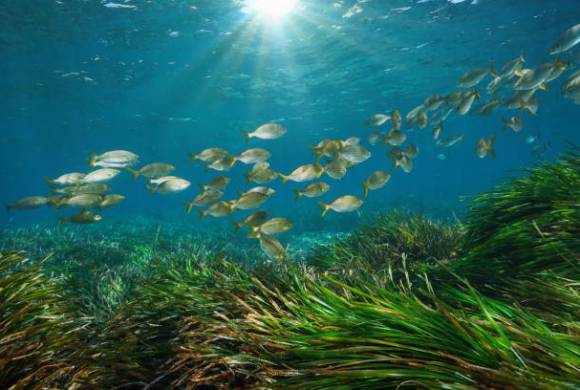
Corals, sponges, and seagrass can be damaged by prolonged heat. Some species may experience mass die-offs, while others may move toward cooler waters.
John Bruno, a marine ecologist at the University of North Carolina, said some species are already moving north in search of cooler conditions. But not every species can simply move somewhere else.
Think of the ocean as a neighborhood. If the temperature suddenly changes, some residents may leave, while others move in. Once enough species start moving around, the whole neighborhood can change.
And that can eventually affect ustoo.
Changes in marine ecosystems can disrupt fishing, aquaculture, and tourism. Warmer waters can also help some invasive species expand into areas where they previously couldn’t survive.
Ángel Borja, a researcher at AZTI who was not involved in the study, has pointed to increasing appearances of jellyfish, salps, and other species along parts of Spain. These changes can create problems for fishermen, fish farms, and people who depend on coastal tourism.
A Hotter Sea, More Trouble on Land
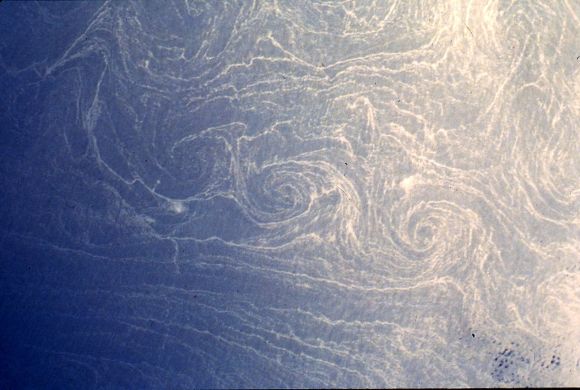
The Mediterranean doesn’t stop affecting us once we leave the water.
Warm seawater can also influence the air above it. For every 1°C of warming, air can hold around 7% more water vapor. That extra moisture can become important when the right weather conditions develop.
A warmer sea doesn’t automatically cause a flood. Weather doesn’t work like a simple on-and-off switch. But when other conditions are already in place, extra moisture can help fuel heavier rainfall.
This is one reason scientists are concerned about increasingly warm European seas.
The Mediterranean has already been linked to intense rainfall events, including the devastating floods around Valencia in 2024. A warmer ocean can provide additional moisture for storms when atmospheric conditions allow it.
The effects can also continue after the storm itself.
Warmer seas can contribute to higher nighttime temperatures along the coast. That means coastal communities may get less relief after a scorching day, making heatwaves harder for people to escape.
So when we hear that the ocean is getting warmer, don’t imagine it as a separate problem happening far away from us.
The sea and the atmosphere are constantly interacting.
The Biggest Concern
One extremely hot summer is worrying. But scientists are more concerned about the long-term change happening underneath those individual records.
Global temperatures are already around 1.4°C above pre-industrial levels, according to the World Meteorological Organization. Greenhouse gas emissions, mainly from burning fossil fuels, are the main reason.
That warmer background means extreme temperatures have a higher starting point. The ocean is absorbing huge amounts of heat, and marine temperatures are rising along with the planet.
Carlos García-Soto, a researcher at Spain’s CSIC-IEO who was not involved in the WWA study, said the main uncertainty is not whether the region is warming, but exactly how large the change is.
There are also natural climate patterns that can influence individual years. El Niño, for example, can affect global and regional temperatures. Scientists are still working to understand how these short-term influences interact with long-term warming.
But the overall direction is hard to ignore.
If global temperatures reach around 2.8°C above pre-industrial levels, the WWA analysis suggests that an event similar to the extreme sea heat of 2026 could happen almost every year in the regions studied.
That would mean today’s record-breaking conditions could eventually become ordinary.
And that’s the uncomfortable part.
We might still be able to enjoy a warm swim in the Mediterranean. We might even love it. But underneath that pleasant feeling, marine ecosystems could be struggling with temperatures they aren’t built to handle.
The Mediterranean isn’t just getting warmer. Extreme heat is becoming easier to produce and harder to call unusual.
The sea may look perfectly calm from the beach. But what happens beneath the surface could tell us a lot about where our changing climate is heading.
Sources:
Leave a Reply