

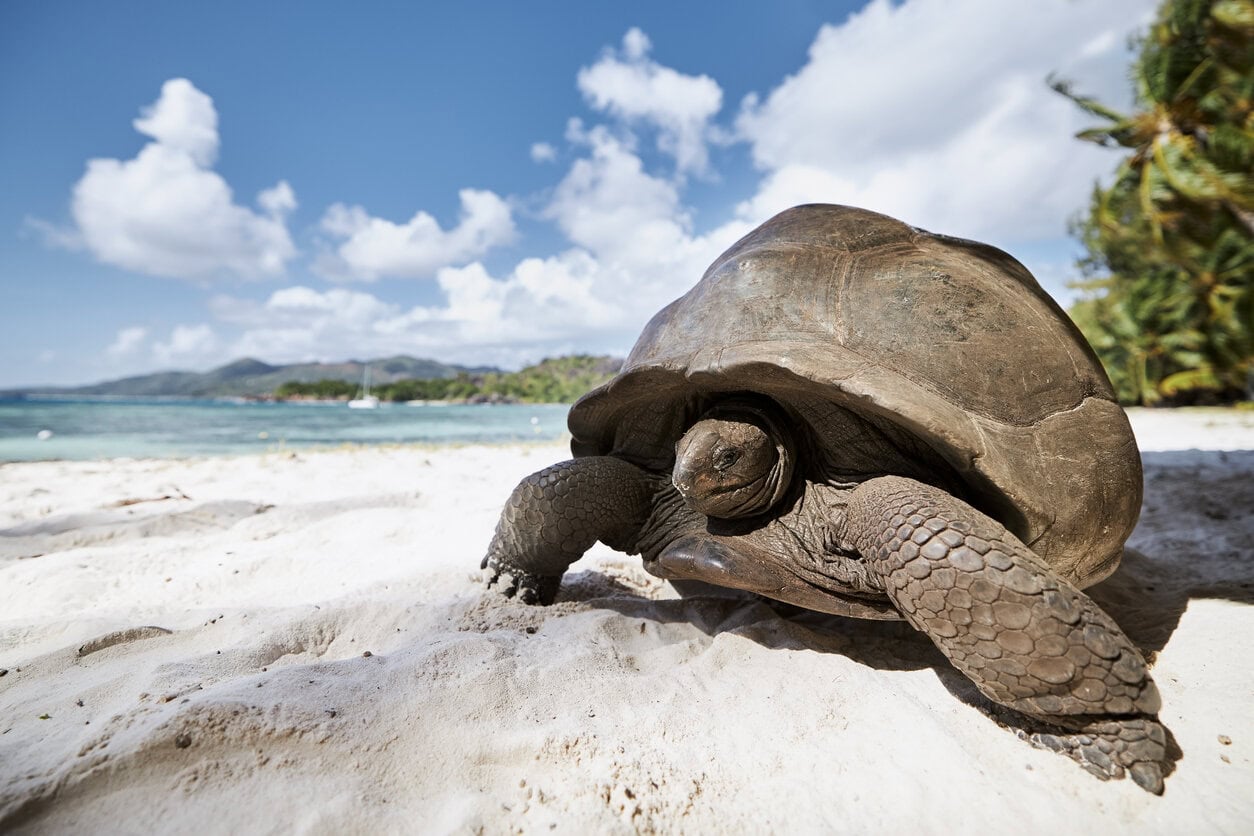
Imagine an animal that never needed to hurry, yet outlasted sailors, pirates, and a near disappearance. Meet the Aldabra giant tortoise, and its inspiritingly inspiring comeback story from the brink of extinction to plenty.
Recent surveys in the Seychelles found something remarkable. These tortoises now outnumber the country’s people for the first time in centuries. Here is how they got there, why scientists trust the count, and what still threatens them. It is good news with a few catches.
Paradise For Tortoises

Before humans arrived, the Seychelles archipelago was a safe haven for animals. To understand the comeback, you first need to know what life looked like for these tortoises back then, and why slow and steady worked so well for them.
The islands’ calm history is written into the DNA of the Aldabra giant tortoise, known scientifically as Aldabrachelys gigantea. Their chunky, armored shells gave them plenty of protection against trouble. Not that they faced much, since the isolated islands had very few natural predators.
Food was plentiful too. With ample meals and little danger, the tortoises could live famously long lives. They never needed to be fast or aggressive. Think of it as the ultimate retirement village, with no rush and no worries.
That relaxed history explains a lot about the species. Evolving without fear, they never developed speed or aggression. This calm, steady nature has helped make them an iconic Seychelles species. They are, quite literally, built for taking it easy.
The Ships

Peace never lasts forever. In the 15th century, new visitors arrived on the horizon, and for the tortoises, their slow and sturdy lifestyle suddenly became a serious problem. Here is how fast things went downhill. It wasn’t pretty.
European explorers began showing up, followed by sailors and even pirates. Crossing the vast seas meant hungry crews needed food. An island full of giant, slow-moving tortoises was basically an all you can eat buffet waiting on the shore.
Every new boatload of seafarers meant fewer tortoises on Aldabra Atoll. Those chunky shells that protected them for so long were useless against hungry visitors. Slow feet made it even worse, since escaping simply was not an option.
The math was brutal. Easy meals plus slow animals added up quickly. Over the following centuries, a species that thrived untouched was pushed toward the edge. Their calm, peaceful lifestyle had never prepared them for this kind of pressure.
By the 19th century, fewer than a thousand tortoises remained on Aldabra Atoll. Picture a busy street shrinking to a handful of people. A species that once roamed freely was suddenly hanging on by a thread, and the future looked uncertain.
Record Breaking Comeback
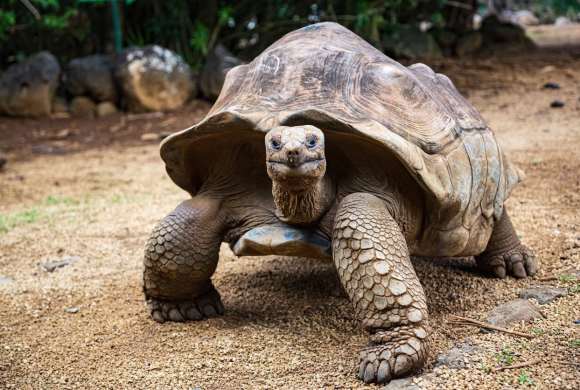
Fast forward to today, and the picture looks completely different. Decades of protection have paid off in a big way. Let’s look at what recent surveys found, and why the numbers matter so much to the people behind them.
Recent surveys of Aldabra Atoll show the species has reached record-high numbers. For the first time in centuries, the tortoises outnumber the Seychelles’ human population. The findings were published in the journal Ecology and Evolution, and they are quite the plot twist.
Why does the human comparison matter? It gives you an easy way to picture the scale. When a wild species outnumbers a whole country’s people, you know the recovery is more than a small success story.
More than 180,000 giant tortoises now roam freely on the atoll. Conservation biologist Frauke Fleischer-Dogley, CEO of the Seychelles Islands Foundation, calls it proof of what long-term commitment can achieve. She also called it wonderful news for Seychelles, for the world, and for everyone who protected Aldabra.
This didn’t happen by luck. In 1981, Aldabra became a strict nature reserve to help the tortoises recover, and in 1982 it was named a UNESCO site. The atoll has been protected since decades, and patience clearly paid off.
Even better, tortoises are doing their own landscaping. Surveys recorded them gathering at the atoll’s “tortoise turf,” open grasslands kept tidy by the reptiles’ constant munching. Think of them as slow, hungry lawn mowers that never ask for a day off.
A Few Warnings
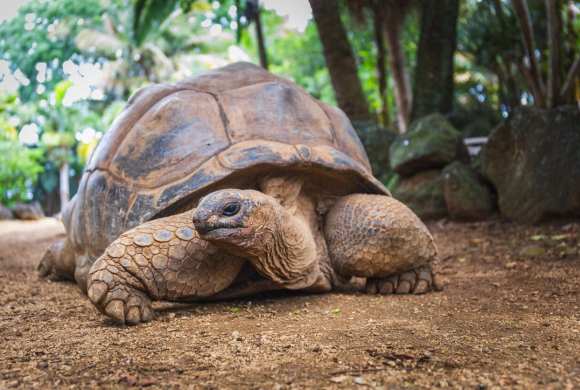
Before anyone throws a party, scientists want to keep things in perspective. The tortoises are safe from hungry sailors for now, but other dangers remain, and the survey itself is meant as a starting point, not a finish line.
Monitoring has long been part of the story. Bunbury notes that Aldabra’s tortoise monitoring program is one of the longest-running in the region, which gives scientists a solid history to compare against. Good records make good decisions.
Counting tortoises is harder than it sounds. Island biologist Nancy Bunbury explains that the atoll’s dense vegetation makes counting genuinely difficult in places. So the team modeled what they did not see as well as what they did, creating the most reliable baseline yet.
This was the first rigorous survey since the 1990s, so the new numbers fill a long gap. Researchers say the result gives managers a benchmark they can use to track the population for decades to come. That’s a valuable tool.
Threats still lurk. The atoll is vulnerable to sea level rise and drought, as fossil fuel use keeps changing the climate at an unprecedented rate. Meanwhile, feral cats and black rats still abound there, preying on tortoise eggs and hatchlings.
Ecologist Dave Hudson of the University of Exeter reminds us that the numbers are a baseline, not an endpoint. He hopes the evidence helps conservation managers track change and act early as tortoises face growing pressure from climate change, drought, and invasive species.
So next time someone ahead of you walks painfully slowly, take a breath. Slow can survive almost anything when it gets a fair chance. The Aldabra giant tortoise proves it, but only because people chose to protect it, and the job is far from finished.
Sources:
Leave a Reply