


When people talk about extinction, they usually think of animals. The dodo, the woolly mammoth, the passenger pigeon. But plants go extinct too, and their disappearance often passes with far less attention.
Some vanished hundreds of millions of years ago, replaced by entirely new forms of vegetation as the planet changed around them.
Others disappeared recently, within the past two centuries, pushed out by agriculture, deforestation, and the arrival of species from other parts of the world.
Together, extinct plants told a story about how life on Earth had changed over time, and how quickly it could be lost.
The History
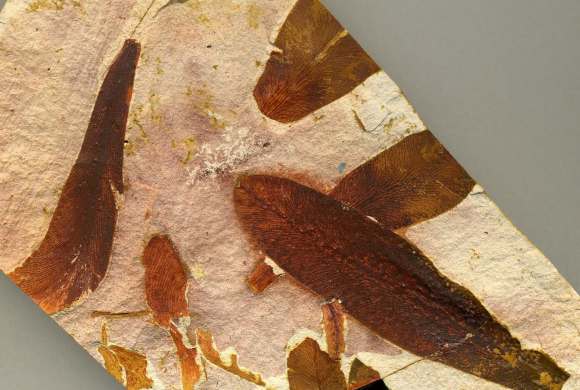
Paleobotanists, scientists who studied ancient plant life, pieced together the history of extinct plants mainly through fossils. Preserved in rock, coal, and hardened sediment, plant remains revealed what kinds of vegetation had covered the Earth during periods that humans never witnessed.
Some of the most dramatic evidence came from places that seemed to have nothing to do with plants at all. When the bodies of Robert Falcon Scott and his crew were discovered in Antarctica after their failed 1912 expedition, the fossils they had collected were brought back to London.
Among them were remains of Glossopteris, a seed-producing tree that had been extinct for 250 million years. The discovery was significant far beyond botany. It confirmed that Antarctica had once been attached to other continents and covered in forest, providing physical evidence for the theory of plate tectonics.
Other ancient plants left behind evidence in a different form entirely. The fossilized remains of Sigillaria, a tree-like plant from 300 to 360 million years ago, had been found during coal mining operations across the world, from Pennsylvania to Inner Mongolia.
Sigillaria and similar plants from the same period were among the primary sources of the fossil fuels that the modern world had been burning for energy. The coal in a power plant was, in part, the compressed remains of ancient forests.
The Records
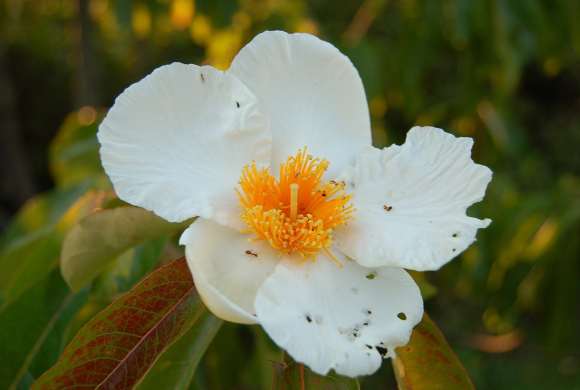
For plants that went extinct more recently, researchers could study not just fossils but historical records, collected specimens, and in some cases, living cultivated examples that survived only because humans had kept them alive.
Franklinia alatamaha, a flowering tree native to the southeastern United States, had been extinct in the wild since 1803. It was first identified by non-native botanists in 1765, named after Benjamin Franklin, and observed to already be rare at the time of its discovery.
Nobody knew exactly why it disappeared from the wild. The tree had survived only because early botanists collected seeds and grew it in cultivation, where it continued to exist today solely because its flowers were attractive enough that gardeners wanted to keep it.
The St. Helena olive, native to the remote island of Saint Helena in the South Atlantic Ocean, had no such luck. Portuguese sailors arrived on the island in 1502, and the combination of deforestation and the introduction of goats gradually stripped away the native vegetation.
The last cultivated St. Helena olive tree died in 2003. The island’s isolation, which might have seemed like protection, had not been enough once humans and their animals arrived.
How Plants Go Extinct

Each extinct plant told a slightly different story about how species disappeared, and looking across the full list revealed several distinct patterns.
Some extinctions had nothing to do with human activity. Cooksonia, one of the earliest known land plants at approximately 425 million years old, evolved out of aquatic green algae and became one of the first plants to grow on dry land.
Its water-conducting stems freed it from needing to stay submerged, which eventually allowed land animals to follow plants onto shore.
Cooksonia had been extinct for hundreds of millions of years, its disappearance part of a natural process of ecological replacement that had been happening since life first emerged.
Calamites, a group of tree-sized plants related to modern horsetails, flourished during the Carboniferous Period when all of Earth’s landmasses were still joined as a single continent. They grew to heights of 30 to 50 meters and spread through underground root systems.
When the climate and the continents shifted at the end of the Permian era, they vanished. Their distant relatives, the small modern horsetails, still grew in swamps around the world.
Human-caused extinctions followed a different logic. Atriplex tularensis, a small annual herb that grew in the salt pans of California’s Central Valley, was last seen in 1991.
As the Central Valley expanded into one of the world’s most productive farming regions, the drainage of inland lakes and the extraction of groundwater removed the specific conditions the plant needed to survive. It was not targeted deliberately. It simply had nowhere left to grow.
Orbexilum stipulatum, a plant native to a rocky island in the Ohio River, disappeared through a similarly indirect process. The plant depended on grazing buffalo that had once roamed the Ohio River valley. When overhunting eliminated the buffalo from the region, the plant lost the conditions it needed. A dam later flooded the island entirely.
The Range

The range of stories behind these extinctions pointed to a broader pattern that researchers had documented across hundreds of plant species. Natural extinctions happened over geological timescales, driven by planetary changes so large and slow that they fell entirely outside human experience.
Human-caused extinctions happened far faster, sometimes within decades, and were driven by much more specific pressures: a habitat drained for farming, a forest cleared for timber, an island stripped bare by introduced animals.
The Toromiro tree, once native only to Easter Island, captured both sides of this pattern. The island’s forests had been cut down over centuries through a combination of harvesting, climate shifts, and cultural pressures.
By the time scientists attempted to save the Toromiro from seeds collected in the 1960s, it was already too late for the wild population. The tree was declared extinct in the wild. Cultivated specimens survived in a few botanical gardens, but the ecosystem that had once supported it was gone.
Across the full history of plant life on Earth, extinction had always been part of the story. What had changed was the pace, and the cause.
Sources:
Leave a Reply