

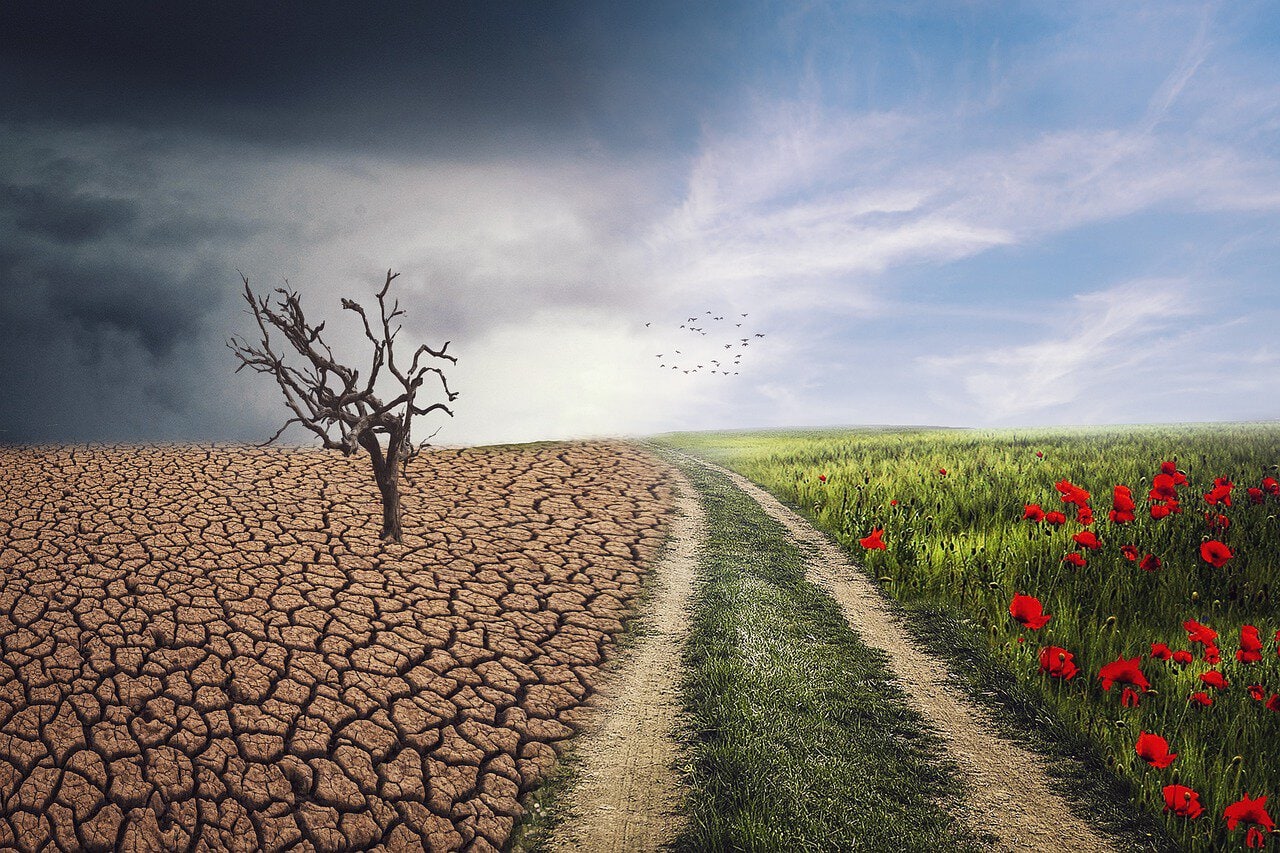
El Nino is a natural climate event that happens in the Pacific Ocean. It occurs when the surface water in the central and eastern Pacific becomes warmer than usual.
This event affects weather patterns all around the world, and it is one of the most powerful natural phenomena that scientists study every year.
So, want to know more about this phenomenon? Let’s find out here.
The Origin
The word “El Nino” comes from Spanish and means “the little boy”. Fishermen in South America gave it the name a long time ago because the warm water usually appears around Christmas time. Since then, the term has been used by scientists everywhere to describe this global weather event.
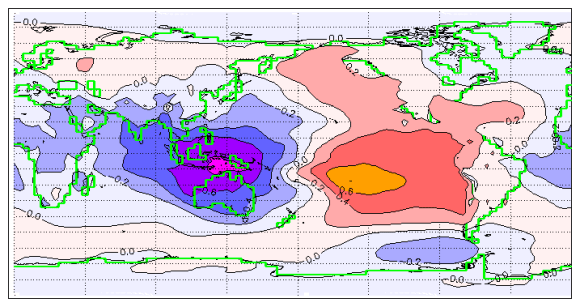
Scientists at the National Oceanic and Atmospheric Administration (NOAA) explain that El Nino happens every two to seven years. It is officially declared when sea temperatures in the equatorial Pacific rise 0.5°C above average for several months in a row. If the temperature rises more than 2°C, the event is called a “very strong” El Nino.
This phenomenon begins when the east-to-west trade winds become weaker than usual. As a result, warm air stays trapped in the eastern and central Pacific instead of moving away naturally. This warm air then raises the average temperature of the whole planet.
Agricultural Impacts
When El Nino combines with long-term climate change caused by humans, it often pushes global temperatures to record-breaking levels. The years 2014-16 and 2023-24 are clear examples of this pattern.
In fact, 2024 became the hottest year ever recorded because of a strong El Nino event together with human-caused warming. NOAA has predicted that the current El Nino event will become moderate or strong by the fall season.
There is a 63 percent chance that sea surface temperatures will exceed 2°C, which would make this a very strong event. Because of this prediction, many scientists believe that another record-breaking warm year may happen soon, possibly in 2027.
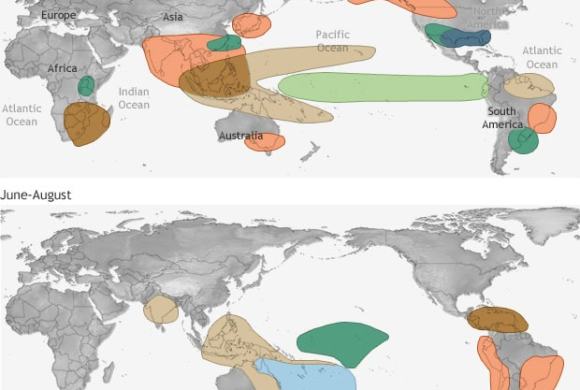
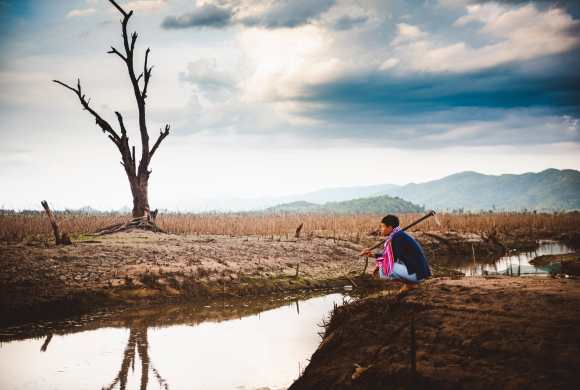
El Nino also brings extreme and unusual weather to different parts of the world. Some regions, such as Australia, sub-Saharan Africa, and Southeast Asia, often experience severe droughts during this event. Meanwhile, other areas, including the southern United States, South America, the Horn of Africa, and central Asia, tend to face heavy floods.
These extreme weather changes can create serious problems for food production around the world. Droughts can destroy important crops such as maize, rice, and wheat, which are needed to feed millions of people.
This problem becomes worse when it happens alongside other global issues, such as fertilizer shortages caused by international conflicts.
On the other hand, El Nino does not bring only negative effects on agriculture. In the Americas, wetter conditions caused by this event can actually increase soybean production. This shows that the impact of El Nino can be different depending on the region.
Hurricane and Typhoon
El Nino does not only affect rainfall and temperature, but it also influences tropical storms across the globe. In the Atlantic Ocean, stronger upper-level winds during El Nino usually reduce the number of hurricanes that form. However, in the eastern and central Pacific, weaker winds tend to increase hurricane activity instead.
According to NOAA’s seasonal outlook, there is a 55 percent chance of below-average hurricane activity in the Atlantic basin this year. At the same time, there is a 70 percent chance of above-average hurricane activity in the eastern and central Pacific basin. These predictions show how El Nino can shift storm patterns from one ocean basin to another.
In the northwestern Pacific, where storms are called typhoons, El Nino often makes these storms stronger and more dangerous. This happens because warm ocean water shifts toward the central Pacific during this event. Because of this shift, typhoons form farther east and travel longer distances over open water.
This longer journey gives typhoons more time to absorb heat and moisture from the ocean. As a result, these storms have a much higher chance of developing into major and catastrophic events. This pattern has been confirmed by research from Yale Climate Connections.
The effects of El Nino are usually strongest during the winter months, especially in the northern hemisphere. This means that countries in the north often experience the most noticeable changes in temperature and rainfall during this season. Scientists continue to monitor these seasonal patterns closely every year.
Health Risks

Ken Graham, Director of NOAA’s National Weather Service, has explained that every El Nino event is different.
According to him, each one leaves its own unique mark on global weather patterns. With advanced monitoring tools and a better scientific understanding, experts hope to predict the impacts of El Nino more accurately in the future.
In addition to its effects on weather and agriculture, El Nino can also create serious risks to human health.
Extreme heat caused by this event can be very dangerous, especially for vulnerable groups of people. These groups include children, the elderly, pregnant women, outdoor workers, and people without proper housing.
Prolonged and intense heatwaves can also increase the risk of wildfires in certain regions. At the same time, higher temperatures often lead to greater demand for air conditioning. This increased demand can result in more burning of fossil fuels, which then worsens climate change even further.
This creates a difficult cycle, where El Nino contributes to climate change, and climate change makes the effects of El Nino even stronger. Because of this connection, many scientists believe that El Nino events will continue to have a bigger impact in the future. Understanding this relationship is very important for preparing communities around the world.
Overall, El Nino is a powerful natural event with effects that reach far beyond the Pacific Ocean. It influences temperature, rainfall, agriculture, storm patterns, and even human health across many countries.
Because of its wide-ranging impact, scientists continue to study El Nino carefully in order to help governments and communities prepare for the challenges it brings.
El Nino is not just a simple weather pattern, but a complex global phenomenon connected to many parts of life on Earth. From droughts and floods to powerful storms and extreme heat, its effects can be felt by people everywhere.
With continuous research and better forecasting, society can become more prepared to face the challenges that come with each new El Nino event.
Sources:
.
Leave a Reply