

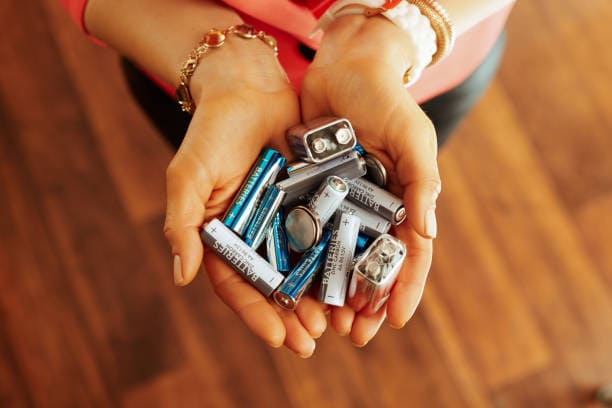
What do you usually do when a battery stops working? You might leave it in a drawer, forget about it, and then find it months later next to an old charger and a pile of random cables.
Or maybe you simply throw it into the trash and move on. It seems harmless. After all, it’s just one little battery.
But batteries aren’t ordinary household waste. Inside them are metals and other materials that can be harmful when handled badly, but can also be recovered and used again.
So if you have a few dead batteries lying around, knowing what to do with them is worth the small effort.
Your Dead Batteries Still Matter
A battery may be finished powering your remote, toy, phone, or car, but that doesn’t mean everything inside it is useless.
Many batteries contain materials such as cobalt, nickel, manganese, lithium, graphite, lead, and other metals. Some of these are valuable, while others can cause environmental problems if they are poorly managed.
When batteries end up in landfills, their materials can eventually leak into the surrounding environment. That can affect soil and water.
The problem becomes much bigger when you consider how many batteries people use. In the United States alone, about 5 billion batteries are purchased every year, yet only around 10% are recycled.
That’s a lot of batteries taking a one-way trip to the trash. Recycling also helps reduce the need to mine new materials.
Mining can have serious environmental and social costs. Cobalt is a good example.
Around half of the world’s raw cobalt production comes from the Democratic Republic of Congo, where mining has been linked to human rights problems, environmental damage, and armed conflict.
Lithium mining has its own challenges. The “lithium triangle,” which includes parts of Argentina, Bolivia, and Chile, has large lithium reserves.
Mining can support local economies, but it can also use large amounts of groundwater in already dry areas. So recycling isn’t only about keeping a battery out of a landfill.
It’s also about giving useful materials another chance. Think of it like finishing a meal and saving the ingredients that can still be used.
The battery may be dead, but its materials don’t have to be.
Not All Batteries
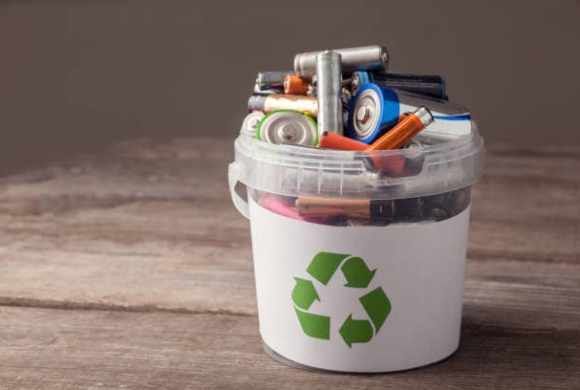
Here’s where battery recycling gets a little confusing. There isn’t one universal battery recycling method because batteries are made differently.
The AA and AAA batteries in your remote are not the same as the rechargeable battery in your laptop. Your car battery is another story altogether.
Single-use alkaline batteries, including common AA, AAA, C, and D sizes, contain materials such as steel, zinc, manganese, potassium, graphite, paper, and plastic.
These materials can potentially be recovered during recycling. There are also single-use lithium batteries and small zinc batteries, such as the round ones used in watches and some hearing aids.
Rechargeable batteries need more attention. You can find them in phones, laptops, cameras, power tools, and many household devices.
These batteries are generally not meant for ordinary household trash and should go through a proper collection or recycling program.
Vehicle batteries are another category. Car and electric vehicle batteries are much larger and require specialized handling, so you should use an appropriate recycling or take-back program rather than trying to deal with them yourself.
The good news is that researchers are also trying to make these batteries last longer.
In 2021, a project supported by the Toyota Research Institute used machine learning and experimental physics to study why fast-charging lithium-ion batteries lose their useful life.
Researchers at Harvard also developed a lithium-metal battery that was tested to handle at least 10,000 charge and discharge cycles.
The longer a battery lasts, the less often you need to replace it. That’s good news for both your wallet and the environment.
What Actually Happens

So, what happens after you drop your old batteries into a recycling collection box?
It depends on the type of battery, but recycling can involve several steps. Some batteries go through high-temperature metal reclamation, where they are sorted, processed, and heated so valuable metals can be separated.
Other batteries, such as alkaline and zinc-carbon types, may be shredded. The process separates materials such as paper, plastic, and metal.
Those recovered materials can then potentially be used to make new batteries or other products.
It’s a bit like taking apart a complicated machine and sorting all the useful pieces into different boxes. One pile might contain metal, another plastic, and another material that can be processed again.
But before your battery reaches a recycling facility, you need to handle it carefully.
Even a battery that no longer works can still contain stored electrical energy. Loose batteries can also come into contact with metal objects and create safety problems.
One simple preparation step is to cover the battery ends with non-conductive clear tape. You can then store used batteries in a plastic bag or cardboard container that doesn’t conduct electricity.
If you’re mailing batteries to a recycling service, check its instructions first. Some facilities have additional packaging and shipping rules.
Basically, don’t treat your battery collection like a box of old pens. Batteries deserve a little more care.
Finding the Right Place
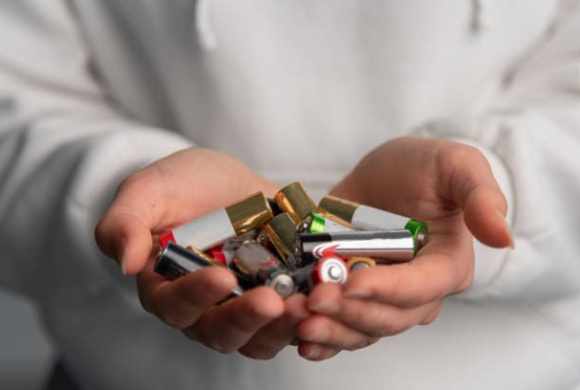
Your local rules will depend on where you live. Some states and cities have special requirements for battery disposal.
California, for example, considers discarded batteries hazardous waste and does not allow them to be thrown into ordinary trash.
Other areas have their own rules, especially for vehicle batteries and rechargeable batteries.
Start by checking your local waste management or recycling website. You can also use recycling locator services such as Earth911 to find collection points near you.
Some home improvement stores and battery recycling organizations also accept certain types of batteries.
For businesses and offices that go through large numbers of batteries, there are larger collection services available too.
The main thing is to check before you throw anything away. A battery that is accepted at one location might not be accepted at another.
And don’t let the process become another “I’ll do it later” job. You know how that goes.
One dead battery becomes three, then five, and suddenly the drawer has its own little battery collection.
Recycling batteries may take a few extra minutes, but those minutes can help keep harmful materials out of the environment and recover metals that can be used again.
So the next time you find a dead battery at home, don’t think of it as useless junk.
It’s more like a tiny box of materials waiting for its next job. And that next job doesn’t have to be sitting forgotten in your drawer.
Sources:
Leave a Reply