

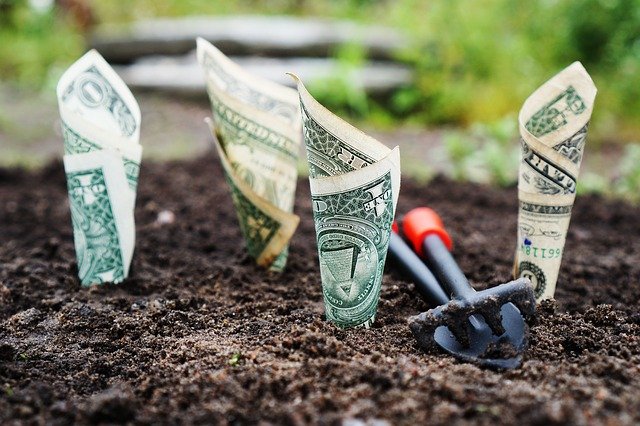
For a long time, businesses treated nature like free infrastructure, something that was always there, quietly providing clean water, healthy soil, and stable weather without ever charging a fee.
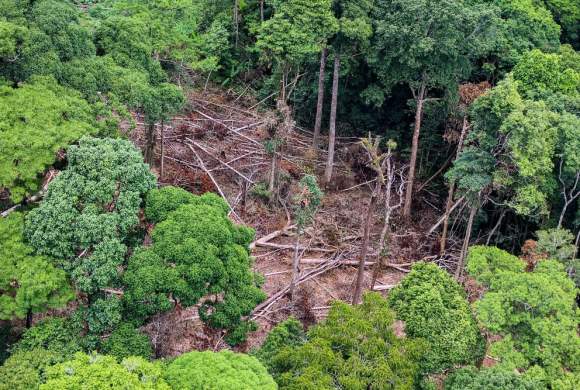
Forests were cleared, rivers were polluted, and coral reefs were destroyed, yet none of those losses appeared as costs in any company’s financial records.
In February 2026, however, a major international scientific organization challenged that assumption directly.
The Intergovernmental Platform on Biodiversity and Ecosystem Services, or IPBES, published a report arguing that the destruction of nature was no longer just an environmental concern. It had become a financial one, and the data supporting that argument were hard to dismiss.
Now we learn that the loss in nature means a loss in economy.
The Report
The IPBES report was not based on a single study or one scientist’s findings. Instead, it was built by pulling together experts from economics, ecology, and finance to answer one central question: how much does the global economy actually depend on living nature? When the researchers combined their findings, a clear and troubling pattern appeared.
The team tracked where money was flowing, both from governments and from private companies, and what those funds were supporting.
They also analyzed decades of data on natural capital, covering forests, wetlands, healthy soil, and ocean ecosystems that farming, energy, and industry all rely on. Since 1992, wealth created by humans had roughly doubled per person.
But natural capital had fallen by nearly 40% over the same period. The global economy had grown, while the biological systems underneath it had been quietly used up, much like spending from a savings account without ever making a deposit.
More Than Ethical Concern

To find out whether biodiversity loss created real financial danger and not just ethical concern, the researchers looked closely at how companies and banks actually related to nature. What they found was striking.
In 2023 alone, an estimated 7.3 trillion US dollars in public and private money flowed into activities that directly damaged biodiversity. Roughly two-thirds of that came from private investors and corporations.
By comparison, only about 220 billion dollars went toward protecting or restoring nature. Harmful subsidies made up about 2.4 trillion dollars of the total. The global financial system was spending far more money accelerating the problem than solving it.
The researchers also examined how transparent companies were about their environmental impact. Fewer than one percent of publicly reporting companies mentioned biodiversity in their official reports.
Among major financial institutions, which together represented about 30 percent of global market value, the most commonly cited obstacle to measuring nature-related risk was a lack of good data and tools.
Companies often had no reliable method for calculating how much they depended on things like bee pollination, natural water filtration, or temperature regulation by forests, because those services had never been given a market price.
A New View

To see why all of this mattered financially, it helped to look at the specific ways that biodiversity loss could damage a business. The first type was physical risk. A food company that sourced ingredients from regions where soil had been depleted faced real supply disruptions.
A hydropower company operating in areas where forests had been cut down faced less predictable water flows. These were not imaginary future problems. They were already happening to companies in various parts of the world.
The second type was transition risk. As governments began strengthening environmental regulations, and as more consumers started caring about a company’s ecological footprint, businesses that had ignored those issues faced the possibility of sudden, expensive adjustments.
What had once been profitable under old rules could quickly become a financial liability under new ones.
The third type was the most serious: systemic risk. The researchers explained that some ecological damage could push natural systems past a breaking point, from which recovery was extremely difficult.
If pollinator populations collapsed, for example, the consequences would not be limited to a single company or industry. The effects would spread through food systems in ways that no individual business could manage on its own.
The report also highlighted something that rarely came up in business conversations. Industrial development was threatening around 60 percent of Indigenous territories globally, and nearly a quarter of those lands faced intense pressure from resource extraction.
The communities living there often carried the heaviest costs of economic activity, while their detailed knowledge of local ecosystems was almost never included in corporate decision-making.
The Conclusion Is…

The IPBES report was careful in its conclusions. It did not predict that ecosystems were about to collapse, and it did not claim that conserving nature was guaranteed to make businesses more profitable.
What it pointed to instead was a structural problem: the financial system consistently rewarded short-term resource extraction while allowing companies to avoid paying for the ecological damage they caused.
The report identified several areas where change was already possible. Governments had the ability to reform subsidies that made harmful activities artificially cheap. They could also require companies to disclose their biodiversity impacts, similar to the way climate-related disclosures had begun in some countries.
Financial institutions could shift their portfolios and develop investment instruments tied to conservation outcomes. The researchers noted that none of these steps required waiting for perfect scientific data. Even imperfect measurement tools, applied carefully, could already support better decisions at both the company and portfolio level.
The broader significance of the report was a shift in perspective. For decades, arguments for protecting biodiversity had been framed mostly in scientific or moral terms. The IPBES assessment reframed the issue in the language of risk and assets. Nature was not simply the environment surrounding the economy.
It was part of the economy’s foundation, one that had been undervalued and steadily drawn down. How businesses and investors responded to that reframing would shape not only the future of ecosystems, but the long-term stability of the economy itself.
Sources:
Leave a Reply