

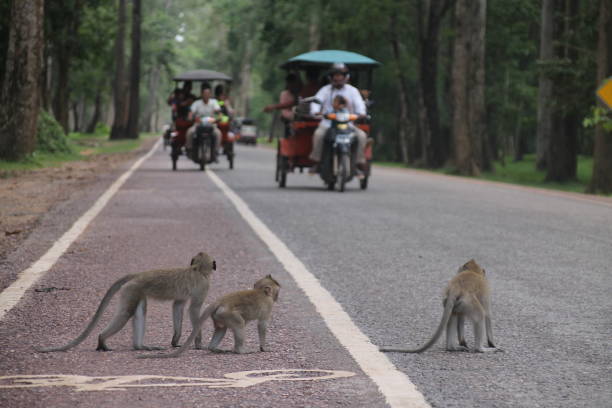
Behind the busy streets and luxury restaurants of Cambodia’s capital, Phnom Penh, an illegal wildlife trade is growing on a massive scale.
Endangered animals are bought and sold openly, while criminal groups make millions of dollars every year from products made from tigers, rhinos, pangolins, and many other protected species.
A one-year undercover investigation by Earth League International (ELI) revealed how organized and profitable this business has become. The findings show that wildlife trafficking is not just about endangered animals.
It is closely linked to corruption, drug trafficking, human trafficking, online scams, and other forms of organized crime. This makes it one of the biggest conservation challenges in Southeast Asia, and we should pay attention to it.
An Organized Criminal Network
The investigation, called Operation Sandokan, was carried out between 2025 and 2026. During the operation, undercover investigators gathered evidence and identified five people believed to be leading Cambodia’s illegal wildlife trade.
Their names were removed from the public report for legal reasons, but investigators shared them with U.S. law enforcement agencies. According to ELI, all five suspects are of Chinese descent and have strong business connections in Cambodia.
Two of them are believed to be among the largest wildlife traffickers in the lower Mekong region. Investigators found that they own at least nine shops selling wildlife products. They also run a factory that turns rhino horn and ivory into expensive items. Another business produces tiger bone wine, an alcoholic drink made by soaking tiger bones in wine.
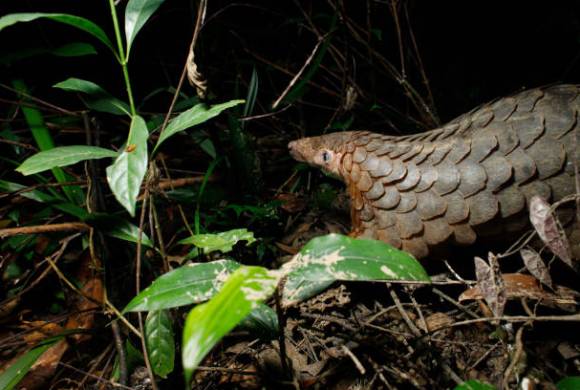
During the investigation, officers found many illegal wildlife products. These included live tiger cubs, tiger skins, rhino horns, elephant ivory, pangolin scales, protected corals, and bottles of tiger bone wine shaped like tigers.
Andrea Crosta, Executive Director of ELI, said, “The big surprise was the incredible quantity of wildlife in the hands of these people.”
The investigation also showed that wildlife crime is connected to many other illegal activities. Warehouses storing wildlife products also contained methamphetamine and illegally logged timber.
Some of these warehouses were located inside Special Economic Zones. Investigators also found links to human trafficking, prostitution, drug trafficking, and online scam centers. Crosta explained why criminal groups continue to trade wildlife.
He said, “These people are making millions of dollars every year from other kinds of crimes, so they would not waste their time on wildlife if it wasn’t very profitable as well.” His statement shows that wildlife trafficking has become a highly profitable business for organized crime groups.
Tigers Are Paying the Highest Price
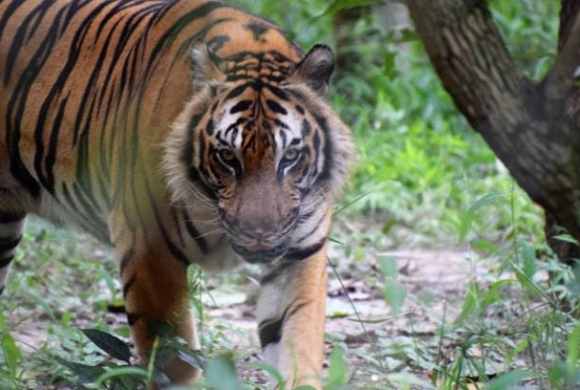
One of the most shocking discoveries involved the trade in tigers. Investigators found that tiger meat is served in expensive restaurants in Phnom Penh. These restaurants are popular with wealthy Chinese businessmen and senior Cambodian officials.
They also serve other protected animals such as pangolins, cobras, red pandas, and golden pheasants. Tiger body parts are sold for extremely high prices. Tiger bones can cost almost 2,000 U.S. dollars per kilogram, while tiger penises can sell for about 2,600 U.S. dollars per kilogram.
Because buyers are willing to pay so much money, traffickers continue killing tigers even though international trade is illegal. ELI estimates that at least one tiger may be killed every week just to meet demand in Cambodia.
Some tigers are poached from the wild, especially from India. India has more than 3,600 wild tigers and spends around 30 million U.S. dollars each year protecting them. Other tigers come from tiger farms in Cambodia, Vietnam, Laos, Thailand, and China. These farms breed thousands of tigers in captivity, and many are later killed so their body parts can be sold.
Tiger bone wine is one of the most valuable products. It was once used in traditional Chinese medicine, but today many wealthy people buy it as a luxury item or serve it during business meetings.
Debbie Banks, a wildlife crime expert from the Environmental Investigation Agency, called the findings “new and quite shocking.” She also said it was surprising that such a large illegal market had gone unnoticed for so long.
A Global Smuggling Network
Although Cambodia is an important trading center, most wildlife products are eventually sent to China. China remains one of the world’s biggest markets for illegal wildlife products.
Traffickers use many ways to move products across borders. Shipments travel by airplane, ship, and truck. Many pass through Malaysia, Singapore, or Hong Kong before reaching mainland China. Criminal groups often use fake permits, false shipping documents, and new packaging to avoid customs inspections.
Investigators also found that corruption helps the smuggling business. Some traffickers admitted paying officials along the Mekong River so illegal goods could cross the borders of Myanmar and China without inspection.
Russell Gray from the Global Initiative Against Transnational Organized Crime described the investigation as “a wide-ranging international issue.” He explained that wildlife products come from Africa, Europe, Russia, and South Asia before reaching buyers in China.
Modern technology has also made wildlife trafficking more difficult to stop. Criminals now use messaging apps such as WeChat and Telegram to discuss prices, arrange deliveries, and receive payments. This allows them to communicate without meeting face to face.
Crosta described China as “a kind of black hole” for illegal wildlife products because once shipments arrive there, investigators often cannot trace where they go next.
Of Course, Corruption

The investigation found that corruption is one of the biggest reasons wildlife trafficking continues. According to ELI, powerful officials have protected some of the people involved, making it difficult for police to stop these criminal networks.
The report also shows that traffickers quickly adapt when governments increase enforcement. In 2025, Cambodia cracked down on online scam centers and arrested several suspects. However, many criminal groups simply moved their operations to neighboring Laos and Myanmar.
Debbie Banks explained this problem by saying, “Wherever there’s a law enforcement response, these criminal networks adapt and they move to the next place. Until there are actual arrests and prosecutions, it is just a displacement. It’s not a real disruption.”
Experts say governments must do more than seize illegal products at airports or border crossings. They need stronger international cooperation, better intelligence sharing, and tougher action against corruption. Investigations should focus on the leaders of these criminal groups instead of only arresting low-level smugglers.
Another important recommendation is to close tiger farms. Around 8,900 captive tigers are currently kept in breeding facilities across Asia. Many experts believe these farms continue supplying illegal markets and keep demand for tiger products alive.
China also has an important role in solving the problem. Experts say the country should strengthen customs inspections and educate consumers about the harm caused by buying illegal wildlife products.
ELI has already shared its evidence with U.S. law enforcement agencies. The organization hopes intelligence-based investigations will help arrest the leaders of these criminal networks.
Crosta stressed this point by saying, “If you just stop at seizures at the airport, arresting small-time people, nothing will change, ever.”
The investigation also shows that bringing Bengal tigers back to Cambodia may not be safe yet. Experts say illegal wildlife trade and corruption are still big problems in the country. If the government does not stop these crimes first, the tigers could be in danger.
Sources:
Leave a Reply