


Ever walked into a mall on a scorching summer day and immediately wished you had brought a jacket? You are not alone. In Hong Kong, that sudden chill is so common that some shoppers carry a sweater everywhere, even when it is 32C outside.
Nobody enjoys shivering while they shop, but the problem goes deeper than comfort. Those freezing malls waste huge amounts of energy, even after many promised to cool down. At the same time, they quietly help people who have nowhere else to go.
The Chill Nobody Asked For
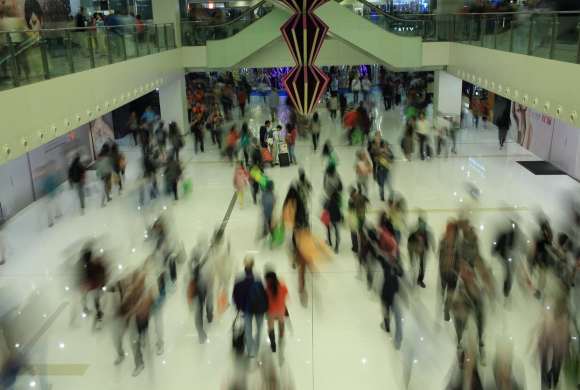
Let’s start with the basics. Overcooling is not just about cold shoppers. It connects to electricity use, carbon emissions, and a voluntary promise that many malls signed. Here is how the numbers add up in a city that depends heavily on air conditioning.
Take Zhou Yibing, who studied in Hong Kong for years and now carries a jacket everywhere. At Times Square mall, she told Earth.Org it was 32C outside but felt like 18C inside. Her friend, a tourist, started shivering within ten minutes.
Air conditioning makes up 29 percent of the city’s commercial electricity use. Electricity generation is also Hong Kong’s biggest source of greenhouse gases, at roughly 60 percent of the total. So every extra degree of cold in a mall adds to the city’s carbon footprint.
The government tried a gentle fix. In 2012, it launched the Energy Saving Charter, a voluntary promise asking malls to keep indoor temperatures between 24C and 26C from June to September. In 2026, over 3,500 premises signed up, including 247 malls.
The savings could be real. According to CLP Power Hong Kong, the city’s largest power company, electricity use drops by 3 percent for every 1C increase. That sounds small, but across hundreds of huge buildings, it adds up fast.
The Promise Keeps Melting Away
A pledge only works if people follow it. Surveys and on-site measurements suggest many malls are still setting the thermostat too low. Experts say the reasons come down to money, customer habits, humidity, and a charter that nobody is forced to obey.
A 2016 survey by green group Green Sense checked 10 malls that had signed the Charter. Nine did not meet the recommended range. In 2024, The Green Earth looked at the 10 largest malls. Only seven had signed, and four of those still ran too cold. Elements hit 21.7C.
Earth.Org’s own reporters measured temperatures at nine malls in May and June. Except for Olympian City and Festival Walk, every mall stayed below 24C. At Elements, some spots dropped under 22C, such as beneath air vents and inside the supermarket.
So why do malls do it? Xu Yuan, an associate professor at the Chinese University of Hong Kong, calls overcooling a rational decision to maximize profit. Malls fear that warmer air drives customers away, while a cold space rarely does the same.
Alan Lam of the Asian Institute of Built Environment adds that Hong Kong is humid, and warmer indoor air feels even stickier. Meanwhile, Steven Chan of The Green Earth points to weak monitoring. Officials say premises are reviewed and may be removed from the Charter if they fail.
A Lifesaver

Here is the twist. Overcooled malls are not only wasteful. During heatwaves, they work as free cooling shelters for people who cannot cool down at home. That makes the whole issue harder to judge as simply good or bad.
Wong Tai-ming, 73, works in a nearby park and spends his lunch hour on a bench inside Pacific Place. The temperature outside hit 32.8C that day. As he told Earth.Org, it was simply too hot to stay out there.
David Bishai, a professor at the University of Hong Kong’s School of Public Health, says cooling is now a public health matter. He warns that if everyone switched off their air conditioners to save carbon, the death rate would go up much higher.
For older adults, people with chronic illnesses, and outdoor workers, cool indoor spaces can mean survival rather than comfort. Many people also cannot afford rising electricity bills at home, so malls become one of the few easy places to rest and recover.
Hiuching Chan from the Community Climate Resilience Concern Group often sees mall benches filled with people who clearly are not there to shop. She suggests malls could take on a social role by opening their facilities to vulnerable groups during extreme heat.
Smarter Ways To Stay Cool
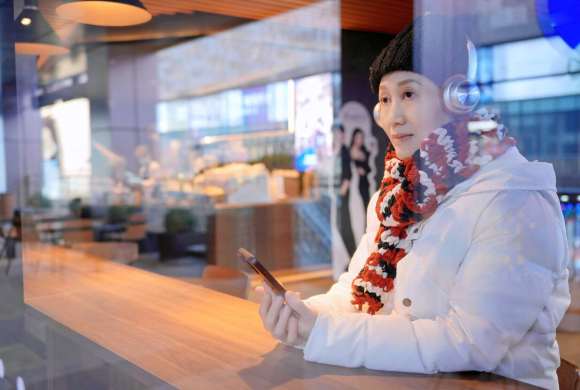
Fixing overcooling does not mean banning air conditioning. Experts want smarter cooling, stronger rules, and more public pressure. Here are the main ideas on the table, from better building design to laws that every mall must follow.
Most malls treat the whole building as one big room. Lam says shops produce their own heat from spotlights, customers, and displays, so malls overcool to compensate. Zone-specific cooling is solution he recommends, meaning each area gets only the cold it needs.
Lighting plays a part too. Steven Chan’s team found corridor lights in seven malls above the recommended maximum of 300 lux. Extra light means extra heat, which forces the air conditioning to work harder. It is a bit like running a heater while the fan blasts.
Xu thinks money works better than promises. He points to the Fair Wind Charter, a voluntary shipping pledge that later gained government incentives and eventually led to a mandatory low-sulfur fuel rule. Malls could follow the same path toward a minimum temperature.
Chan also wants clearer Energy Utilisation Index reports, shown with color-coded labels like those on household appliances and displayed in lobbies. That way shoppers can see which malls waste the most energy and put pressure on them.
Both experts agree that mandatory plans or laws on indoor temperatures are needed. So next time you shiver in a mall, remember that the real fix is not a thicker jacket. As Xu said, it is never too late.
Sources:
Leave a Reply